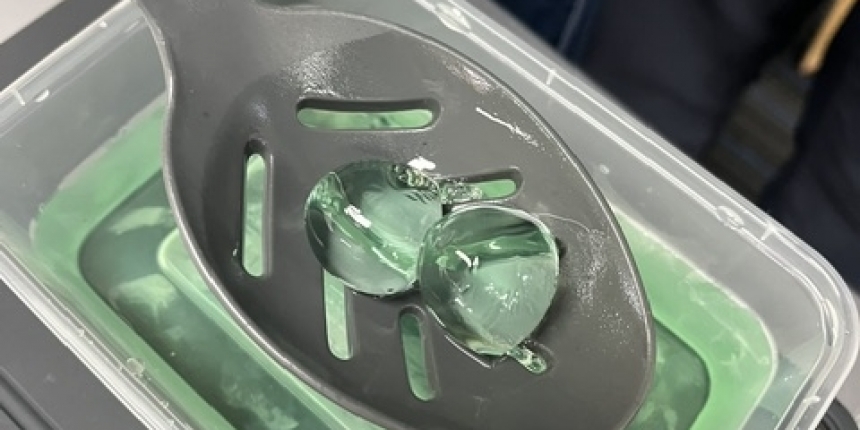
Students in Year 5 recently had the opportunity to explore an innovative approach to hydration through an engaging edible water experiment with Mrs Binns and Mr Binns. The students investigated how edible water bubbles are made, explored the science behind the process and considered how this technology could provide a more sustainable alternative to traditional plastic water bottles.
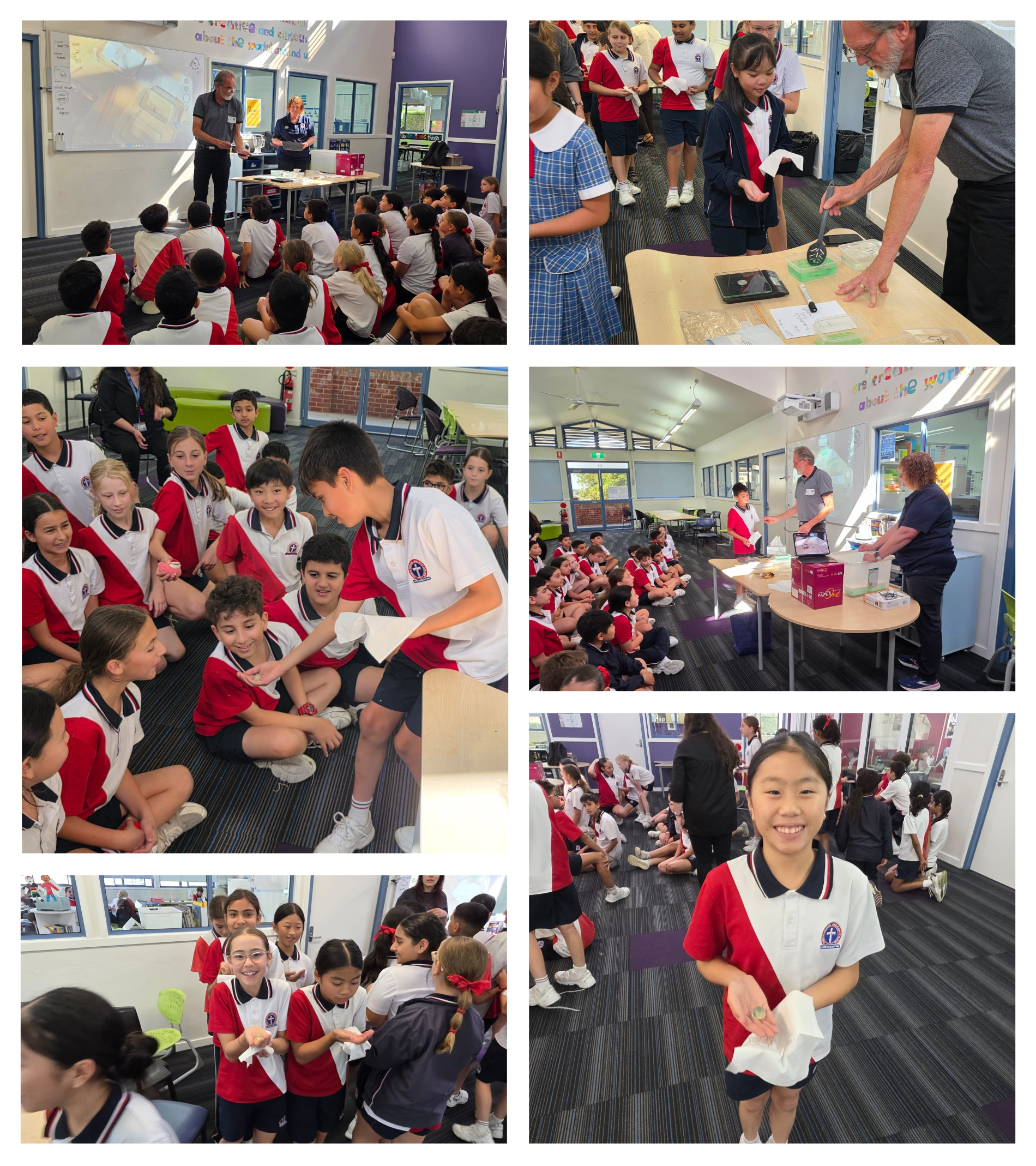
Read on to hear from Rhiannon and Millie about their experience and what they discovered.
Recently, Mrs Binns and Mr Binns came in to do an edible water experiment. Trying the water pill was a particularly interesting experiment. Although there could be improvements flavour-wise, this can be useful in specific situations. For example, at marathons, bottles are used to hydrate the runners, but usually this causes countless bottle messes to clean up afterwards. This is especially inconvenient, as they would be spread out over a course of more than 2 km. Since you can just pop the edible water bubble into your mouth, it causes less inconvenience and pollution. These edible water bubbles are safe to drink as well! They are made out of the chemicals sodium alginate and calcium lactate. A little fun fact about this is that the bubbles are made using the same process as the pearls in bubble tea!
-Rhiannon (5Y)
We tested whether edible water is better than ordinary bottled water. Mrs Binns and Mr Binns came and showed us how we could make edible water. Luckily, a program/website gave Mrs Binns the recipe for the edible water, which included water, calcium lactate, sodium alginate and something to blend the sodium alginate with the water. After we got all the materials, Mr Binns explained to us how the calcium lactate mixes with the sodium alginate and how to make sure the bubble stays in place before we began. Mr Binns pulled out a giant green liquid tub and a kitchen spoon. We started to mix the liquids together to make a grey, transparent liquid.
-Millie (5Y)