

National Reconciliation Week and Respect
This week is National Reconciliation Week. Held annually from 27 May to 3 June, National Reconciliation Week is a dedicated time for all Australians to learn about and celebrate the history and culture of Aboriginal and Torres Strait Islander people in Australia and foster reconciliation discussion and activities.
At its heart, reconciliation is about strengthening relationships between Aboriginal and Torres Strait Islander peoples and non-Indigenous people, for the benefit of all Australians, regardless of cultural background.
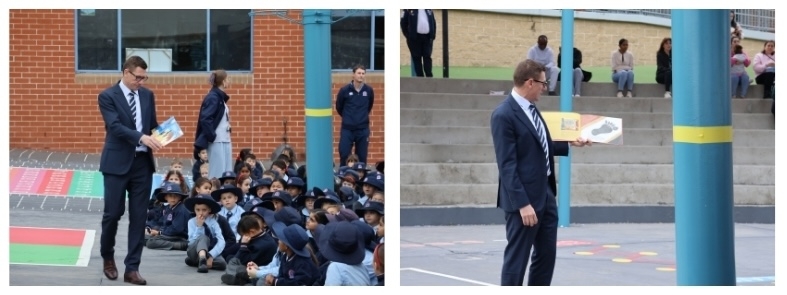
Today at Junior School Muster and Senior School Assembly, I took the opportunity to read a picture book written by an Aboriginal author. The book brought to light some of the challenges and injustice associated with Australia’s shared history and highlighted the opportunity for all Australians to work together towards a future where reconciliation is a lived reality for all.
Essentially, reconciliation is about looking back to understand, be informed and appreciate, so that we can look forward together with respect for others, including Aboriginal and Torres Strait Islander peoples.
In speaking with the students, I reflected on the fact that reconciliation is a Biblical idea. The Bible tells us that God reconciled us to himself or made it possible for things to be made right between us through Jesus’ death on the cross. The Bible also encourages us to seek reconciliation where it is needed.
This year, the theme of Reconciliation Week is two very powerful words: "All In". Reconciliation is not a spectator sport. This means that we can’t just sit on the sidelines and watch others do the right thing – we all have to step onto the field and join the team. This connects perfectly to one of our Positive Learning Behaviours: Respect.
Being "All In" means our respect has to be active. Respect isn't just sitting quietly; it’s about making sure everyone is included, listening to people's stories, and making sure nobody is left sitting on the sidelines alone.
Reconciliation isn’t about guilt. What has happened in the past has happened. Our role is not to look back but to look forward, to get off the sidelines and to respect everyone regardless of their cultural background.
As I reflected with the students about culture and respecting others, it is worth considering the ripple effect our actions and words can have. When we choose to be "All In" with our respect, our kind actions ripple outward. It starts with each student and a friend, but it spreads to the whole classroom, and then the whole College.
To help us to be ‘All In’ on reconciliation, it is helpful to talk more about Aboriginal and Torres Strait Islander peoples, to learn about their culture, their knowledge, their ways of being. This helps us to appreciate and celebrate their culture. This will be something that the students will have the opportunity to do as we head towards Unite Week at the end of this term where we celebrate our cultures as well as the oldest living culture in the world, that of the Aboriginal and Torres Strait Islander peoples.