
When I was a university student doing my postgraduate studies in Education, with a degree in Visual Art under my belt, a lecturer asked my class of aspiring primary school teachers to draw a bicycle. I felt reasonably confident that I could nail this task. Having recently returned from six months in the saddle cycling through Europe, I considered myself to be pretty familiar with a bike. In fact, I cycled to uni every day. So, it was confounding that I struggled with the task. I knew all the bits - the cogs, the seat, the handlebar, the wheels and pedals but I just couldn’t quite remember how they all fitted together visually. I had a go but, to be honest, I was disappointed with the outcome. Everything changed when the teacher wheeled in a bicycle and we all had a second chance to redeem ourselves with a second drawing, this time from observation.
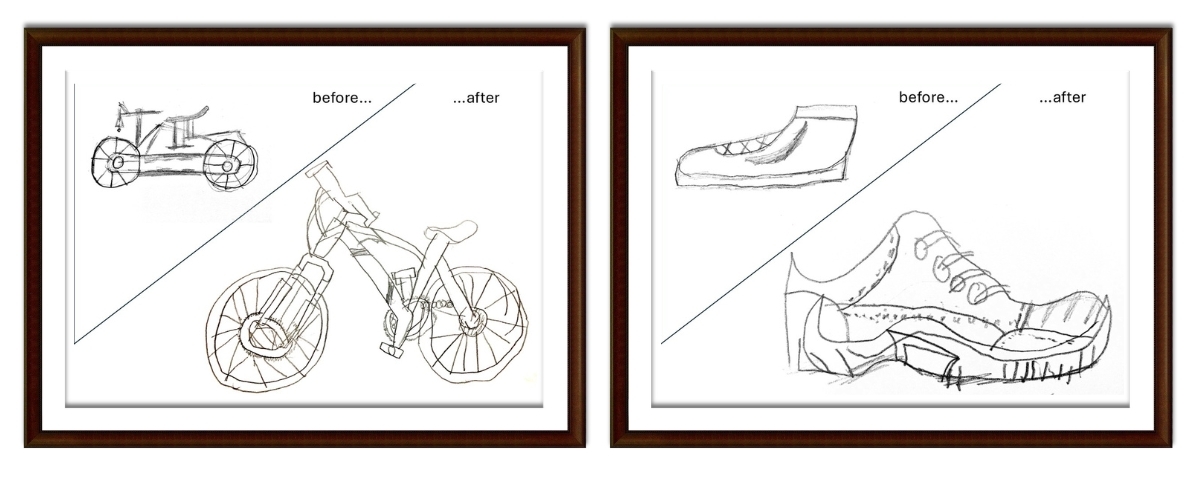
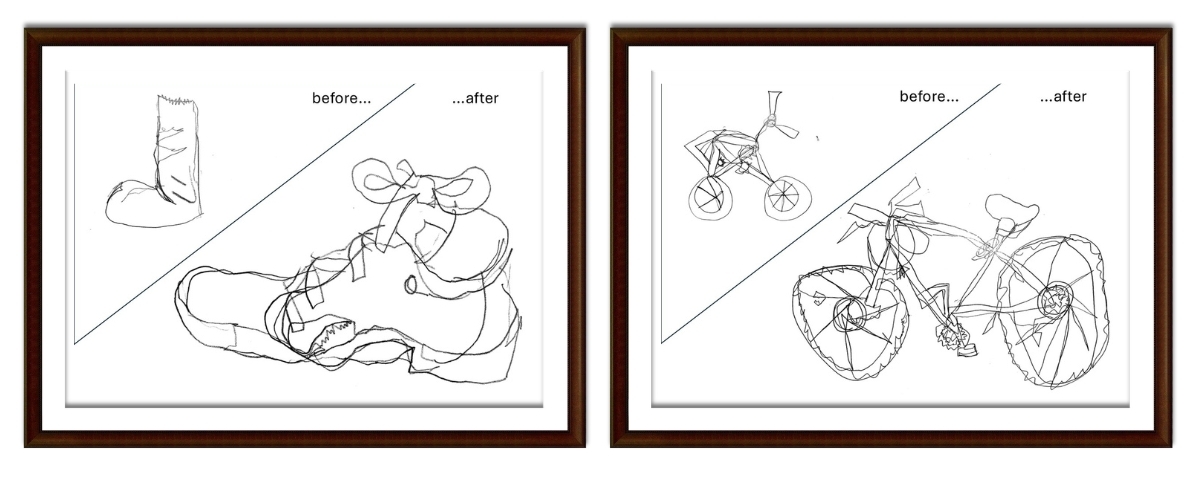
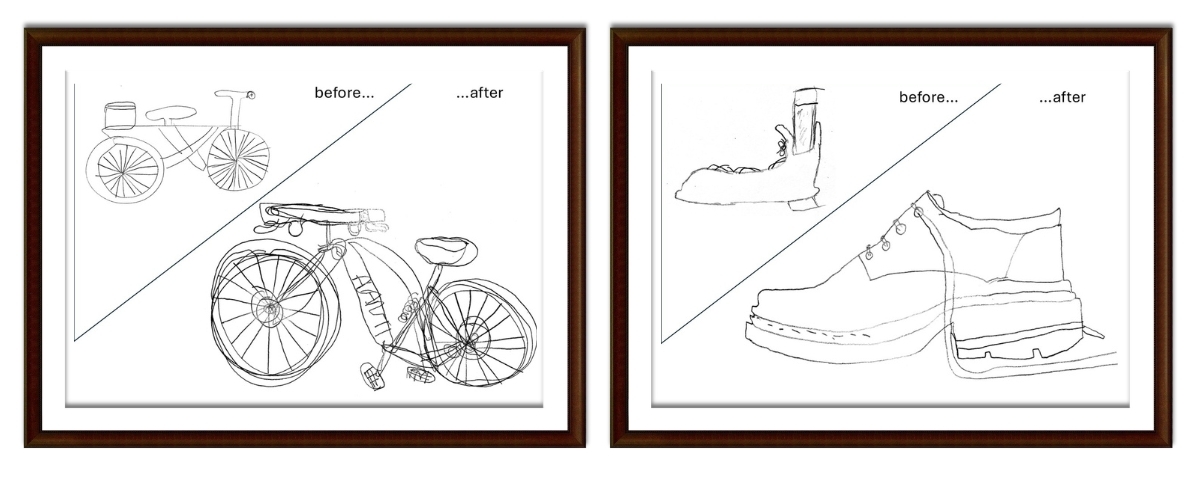
This week I challenged the Year 4 students with the same task. Taking the same approach, students first drew their best bicycle from memory. They were then challenged to use the drawing techniques we had been practising during the lesson, spending more time directing our gaze at the object, rather than the page where our drawings were materialising. The improvement in the students’ drawings is evident here in these ‘Before and After’ images. For some students, the wheels, which we remember as circles, may appear elliptical, depending on the angle of view. We tried the same approach with different objects, a pair of scissors, a hand, a shoe and noted our improvements with using our observational skills over memory.
It is always exciting to see students making progress with their artistic skills, but the deeper lesson here was that making art can help us to know our world better. Drawing gives us an opportunity to take a quiet moment, both to see and to know.
Mrs Ann McDermott
Junior School Specialist Teacher (Visual Arts)
